Types of Pedicures: A Complete Guide to Nail and Cuticle Care, Benefits, and What to Expect
Pedicures? You work long work shifts; you need pedicures. Going for a trip; you need a pedicure. Came back from a trip; you want a retouch. Have a wedding to attend? Compulsorily, a pedicure is needed. And everything in between deserves a pedicure. Uff... that’s tiring, isn’t it? So is it for your hard-working feet that go a thousand miles before sleeping. That’s where a pedicure becomes more than a beauty treatment.
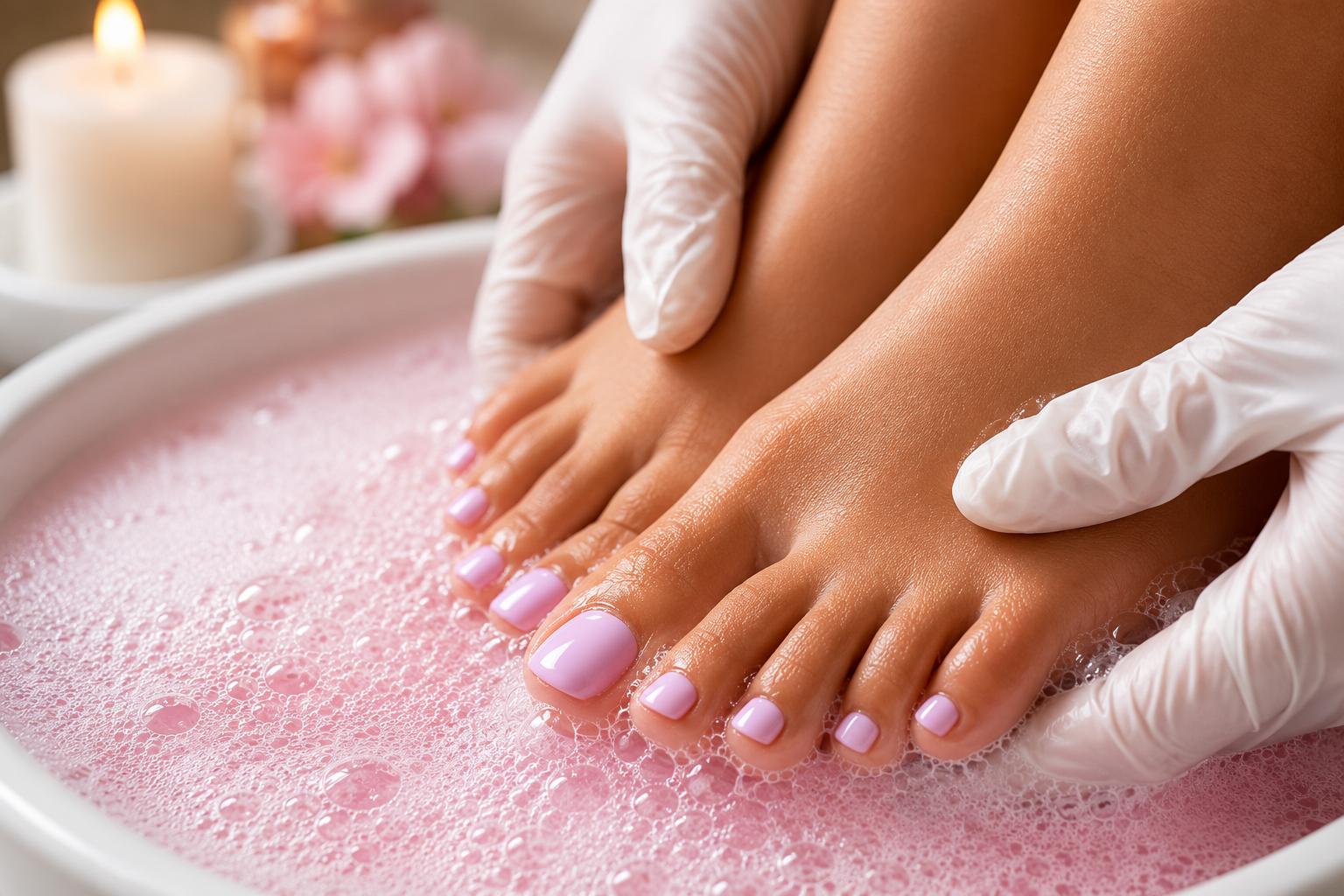
A pedicure is far more than a pretty polish or a seasonal treat; it's a dedicated session of nail and cuticle care that supports foot health, comfort, and confidence. It's about preventing ingrown nails before they become painful, softening rough heels before they crack, caring for cuticles that protect your nails from infection, and giving your hardworking feet the maintenance they quietly deserve. The polished toenails at the end are simply the finishing touch. The real transformation begins long before the colour is applied.
Evolution doesn’t always happen in science; it happens in beauty industries as well. Today, pedicure treatments have evolved into an entire world of treatments designed for different lifestyles and needs. Some people simply need a quick refresh during a busy week, while others are looking for deep hydration, callus care, stress relief, or long-lasting gel colour before an upcoming holiday. That raises an important question: Which type of pedicure is actually right for you?
This comprehensive guide answers exactly that.
We'll take you on a journey through the fascinating 4,000-year history of pedicures, explore why professional nail and cuticle care is essential for healthy feet, and break down the most popular types of pedicures—including classic, spa, gel, French, and specialty treatments. You'll learn what happens during each service, who it's best suited for, how long appointments typically last, and what kind of results you can realistically expect.
Whether you're booking your very first appointment or simply looking to elevate your foot care routine, this guide will help you understand not just what a pedicure includes but why it has remained one of the world's most trusted self-care rituals for over four millennia.
Where Did Pedicures Come From?
The history of pedicures stretches back thousands of years, long before modern nail salons existed. In ancient Egypt, foot care was a marker of status and hygiene. Wealthy Egyptians used natural oils, pumice stones, and basic metal tools to smooth rough skin and maintain their nails. Hieroglyphics and archaeological finds suggest that both men and women of higher social classes practiced regular foot grooming, often as part of broader bathing and beauty rituals.
The Romans also valued foot care, incorporating it into their famous bathhouse culture. Warm soaks, scrubs with abrasive materials, and massage with oils were common practices. For the Romans, healthy feet were not just about appearance; they were essential for mobility, military readiness, and daily life in a society built on walking and standing.
During the Middle Ages and into the 19th century, foot care became more practical and often medical in nature. Professional "chiropodists" emerged to treat corns, calluses, and ingrown nails. Pedicures as we recognize them today began to take shape in the late 19th and early 20th centuries, when the beauty industry expanded, and nail care moved from purely medical settings into salons.
The invention and commercialization of modern nail polish in the 1930s transformed pedicures from functional treatments into beauty rituals. By the mid-20th century, pedicures had become mainstream in North America and Europe, with dedicated pedicure stations, specialized tools, and a growing menu of services. In recent decades, spa culture, hygiene standards, and advanced products have elevated pedicures into comprehensive treatments that combine aesthetics, relaxation, and foot health.
Pedicures Are Not Just About Aesthetics
While many people think of pedicures as a cosmetic luxury, they play an important role in maintaining healthy feet and nails. Regular pedicures, when performed with proper hygiene and technique, can support nail and cuticle health in several ways.
- Pedicures help prevent ingrown toenails. Proper trimming and shaping reduce the likelihood of nails growing into the surrounding skin, a common and painful problem.
- Careful cuticle care: Softening, gently pushing back, and minimal trimming of cuticles help protect the nail matrix from bacteria while keeping the nail edge neat. Over-cutting cuticles, however, can increase infection risk, which is why trained technicians follow conservative techniques.
- Exfoliation and moisturizing during a pedicure also benefit the skin on your feet. Removing dead skin cells and applying hydrating products can reduce cracking, calluses, and rough patches, which in turn lowers the risk of fungal or bacterial entry points.
- Massage components in many pedicures improve circulation in the feet and lower legs, which can reduce swelling and fatigue, especially for people who stand or walk for long periods.
It's important to note that people with certain health conditions, such as diabetes, poor circulation, or severe nail disorders, should consult a healthcare provider before getting a pedicure. In some cases, a medical or podiatry-focused pedicure performed by a trained professional is a safer option than a standard salon service.
Understanding Your Toenails and Cuticles
To fully appreciate what a pedicure does, it helps to understand the basic anatomy of your toenails and cuticles.
Toenail Structure
Your toenail consists of several parts: the nail plate (the hard, visible part), the nail bed (the skin beneath the plate), and the nail matrix (the root where new nail cells are produced). Nails grow from the matrix outward, and their health depends on factors like nutrition, circulation, and protection from trauma or infection.
Common toenail issues include thickening, discoloration, ridges, brittleness, and fungal infections. Some of these problems can be managed or improved with regular, gentle pedicures, while others may require medical attention.
Cuticles
The cuticle is the thin layer of skin at the base of your nail that overlaps the nail plate. It acts as a protective seal, preventing bacteria and debris from entering the nail matrix. The proximal nail fold, the skin surrounding the nail, works together with the cuticle to protect the growing nail.
Healthy cuticles are flexible and intact. When they become dry, cracked, or over-trimmed, they can allow infections to develop. Safe cuticle care during a pedicure involves softening the area with a soak or oil, gently pushing back excess skin, and trimming only loose, dead tissue when necessary. Aggressive cutting should always be avoided.
Common Types of Pedicures for Nail and Cuticle Care
Pedicures range from quick, basic treatments to luxurious spa experiences. Each type offers different levels of care, relaxation, and results. Understanding these options can help you choose the right pedicure for your needs.
1. Classic Pedicure
A classic pedicure is the foundation of most nail salon menus. It focuses on essential nail and cuticle care with minimal extras. Typical steps include a warm soak, nail trimming and shaping, cuticle care, light massage, and polish application if desired.
This type of pedicure is ideal for first-timers, people on a budget, or anyone who wants clean, neat nails without additional treatments. It maintains basic nail health and keeps feet looking polished with relatively low time and cost investment.
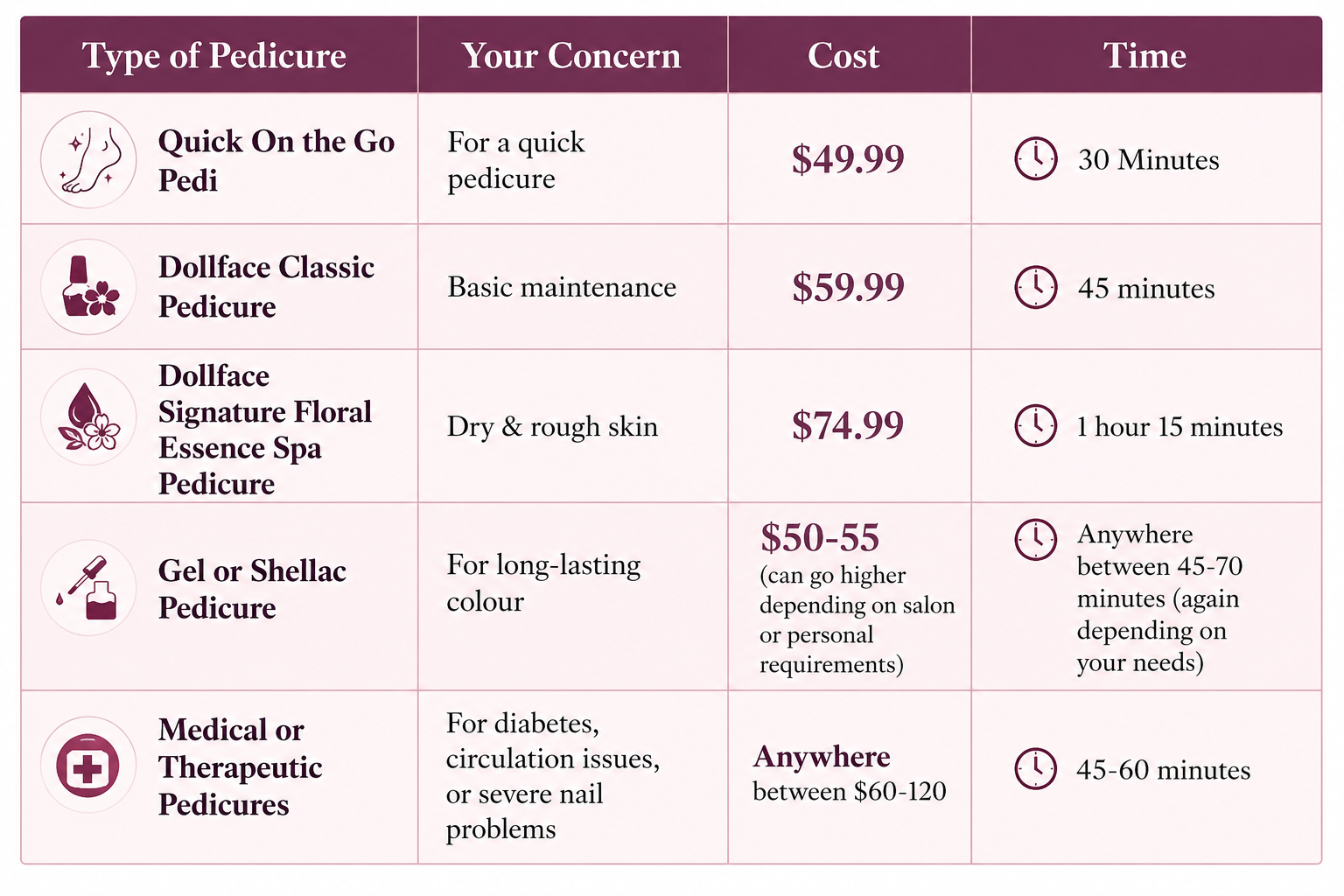
Like a Quickie On the Go Pedi at Dollface Beauty & Wellness in Oakville, that retails for $49.99 and runs for a good 30 minutes, typically includes a quick soak, nail trimming and shaping, light cuticle care, and a moisturizing finish, with optional polish.
A step up for the same is the Dollface Classic Pedicure, which goes on for 45 minutes, adds a more thorough soak, precise cuticle work, a moisturizing foot and calf massage, and polish application, usually priced around $59.99.
2. Spa Pedicure
A spa pedicure builds on the classic format by adding exfoliation, extended massage, and specialized treatments like masks or wraps. The soak is often longer and may include salts, oils, or botanicals. A scrub is used to remove dead skin from the feet and lower legs, followed by a richer massage with lotions or oils. Many spa pedicures also include a hydrating mask or paraffin treatment.
Spa pedicures are excellent for people with dry, rough skin or calluses, as well as anyone seeking relaxation alongside beauty benefits. The extra steps improve skin texture, hydration, and circulation more than a basic pedicure can.
Dollface Signature Floral Essence Spa Pedicure goes on for 1 hour 15 minutes, combines a Rose Petal Lavender Milk Bath, Honey Foot & Calf Scrub, a 10-minute foot massage, and a Lavender Mint deep hydrating mask finished with a hot towel. Such comprehensive spa pedicures are commonly priced around $74.99.
3. Gel or Shellac Pedicure
A gel or Shellac pedicure uses long-lasting polish that is cured under a UV or LED lamp. The pedicure steps (soak, nail care, cuticle work, massage) are similar to a classic or spa pedicure, but the polish application differs.
Gel polish can last two to four weeks without chipping, making it popular for travellers, busy professionals, and anyone who wants low-maintenance colour. However, removal requires soaking in acetone, and frequent use without breaks can dry out nails. It's best to alternate gel pedicures with regular polish or take occasional breaks to let nails recover.
4. French Pedicure
A French pedicure refers to a style rather than a specific treatment type. It features a natural or pale base with clean white tips, creating an elegant, understated look. This style can be achieved with regular or gel polish and is often paired with classic or spa pedicure services.
French pedicures are popular for professional settings, formal events, and those who prefer a minimalistic aesthetic. They require precise application to achieve crisp, even lines.
5. Specialty and Therapeutic Pedicures
Beyond the standard options, many salons offer specialty and therapeutic pedicures designed for specific needs.
- Paraffin Pedicure: Warm paraffin wax is applied to the feet, creating deep hydration for very dry or cracked skin. It's often added to spa pedicures as an upgrade.
- Medical or Podiatry-Focused Pedicure: Performed by or under the guidance of foot-care professionals, these pedicures prioritize safety and health, especially for clients with diabetes, poor circulation, or nail disorders.
- Callus Treatment Pedicure: Focused on reducing thick calluses through exfoliation, filing, and sometimes mild acids. Ideal for people with heavy callus buildup.
- Aromatherapy Pedicure: Essential oils are used in the soak and massage to promote relaxation and provide skin benefits.
- Luxury or Signature Spa Pedicures: These combine multiple premium treatments, such as milk baths, scrubs, masks, extended massage, and sometimes reflexology or hot stone therapy.
The Dollface Floral Spa Pedicure fits into this category as a luxury, aromatherapy-style pedicure with floral and herbal elements designed for maximum relaxation and skin hydration.
What to Expect During a Pedicure Appointment
Knowing what happens during a pedicure can reduce anxiety and help you prepare. While details vary by salon and service type, most pedicures follow a similar sequence.
Upon arrival, you'll have a brief consultation to discuss any foot concerns, sensitivities, or preferences. Your technician will then guide you to a pedicure station with a foot bath.
The appointment typically begins with a warm soak to soften skin and nails. Some soaks include salts, essential oils, or botanicals for added benefits. After soaking, your nails are trimmed and shaped to your preferred length and style.
Cuticle care follows, with the technician softening the area and gently pushing back or trimming only loose skin. Next comes exfoliation, usually with a scrub applied to the feet and lower legs to remove dead skin cells.
A massage with lotion or oil is then performed, focusing on the feet and sometimes the calves. In spa pedicures, this step is longer and more luxurious. Some treatments include a mask, paraffin dip, or wrap for deeper hydration.
And finally, this whole process ends with a polish of your choice; the technician will apply a base coat, colour, and top coat. Regular polish needs time to air-dry, while gel polish is cured under a lamp. Finally, you'll receive aftercare advice, such as avoiding tight shoes immediately after and moisturizing regularly.
Express pedicures shorten or skip some steps, while spa and luxury pedicures add extra treatments for enhanced results.
Choosing the Best Pedicure for Your Needs
With so many options available, choosing the right pedicure depends on your goals, schedule, and budget.
- Short on time: An express or quick pedicure is ideal. These services focus on essential nail and cuticle care with minimal extras, often completed in 30 minutes.
- Basic maintenance: A classic pedicure provides thorough nail trimming, shaping, and cuticle care with light massage and polish. It's suitable for regular upkeep without the extras of a spa treatment.
- Dry or rough skin: A spa pedicure with exfoliation, extended massage, and hydrating masks will deliver better results for rough feet and calluses.
- Long-lasting colour: If you want polish that stays chip-free for weeks, consider a gel or Shellac pedicure.
- Special foot concerns: If you have diabetes, circulation issues, or severe nail problems, look for medical or therapeutic pedicures performed by trained professionals.
How to Care for Your Feet After a Pedicure
Proper aftercare helps your pedicure last longer and keeps your feet healthy between appointments.
- Avoid tight or restrictive shoes immediately after your pedicure to prevent smudging polish and allow your skin to breathe.
- Moisturize your feet daily, focusing on heels and any rough areas.
- Use a gentle foot file or pumice stone once or twice a week to maintain smoothness.
- Avoid over-exfoliating.
- Don't cut your cuticles at home. Instead, apply cuticle oil regularly and gently push them back if needed.
- Trim your nails straight across to reduce the risk of ingrown toenails.
Most people benefit from a pedicure every four to six weeks, depending on nail growth, activity level, and personal preference. If you notice signs of infection, severe ingrown nails, or persistent pain, consult a podiatrist rather than continuing with salon pedicures.
Safety and Hygiene: What to Check Before You Book
Not all salons maintain the same standards, so it's important to prioritize safety and hygiene when choosing where to get a pedicure.
Look for clean workstations, properly sterilized or disposable tools, and well-maintained foot baths. Technicians should wash their hands before each service and use fresh linens for every client. Ventilation should be adequate, especially if strong-smelling products are used.
Licensed and trained technicians are more likely to follow safe practices, especially for cuticle care and nail trimming. Read reviews and ask friends or family for recommendations. In areas like Oakville, multiple reputable salons offer classic, spa, and specialty pedicures, so take time to find one that prioritizes hygiene and qualifications.
Final Thoughts
From royal beauty rituals in ancient Egypt to the luxurious spa experiences we enjoy today, pedicures have stood the test of time for one simple reason; they care for one of the hardest-working parts of our body. While beautifully polished toenails are certainly a bonus, the true value of a pedicure lies in maintaining healthy nails and cuticles, preventing common foot concerns, improving comfort, and giving yourself a well-deserved moment of relaxation.
The right pedicure isn't necessarily the most expensive or the most luxurious; it's the one that suits your lifestyle, foot health, schedule, and personal preferences. Whether you're looking for a quick refresh during a busy week, long-lasting gel colour before a holiday, or a deeply hydrating spa treatment to revive tired feet, understanding the different types of pedicures empowers you to choose a service that delivers both immediate results and long-term benefits.
Equally important is choosing a salon that values hygiene, personalized care, and experienced technicians. A professional pedicure should never feel like a one-size-fits-all treatment. Your feet deserve thoughtful attention, safe practices, and recommendations tailored to your individual needs.
If you're looking for expert pedicures in Oakville, Dollface Beauty & Wellness offers everything from express maintenance appointments to indulgent spa pedicures in a welcoming, hygienic environment. Every treatment is designed with healthy nails, beautiful results, and your overall comfort in mind, so you can leave feeling refreshed, confident, and ready to put your best foot forward.
Frequently Asked Questions
Q-1. How often should I get a pedicure?
Ans. Most people benefit from a pedicure every four to six weeks. This allows time for nail growth and skin recovery while maintaining a neat appearance.
Q-2. Are pedicures safe during pregnancy?
Ans. Generally, yes, but choose a well-ventilated salon and avoid harsh chemicals. Some women prefer to skip polish or use pregnancy-safe products. Always consult your healthcare provider if you have concerns.
Q-3. Can pedicures help with ingrown toenails?
Ans. Proper trimming and shaping during a pedicure can help prevent ingrown toenails. However, if you already have a painful or infected ingrown nail, see a podiatrist instead of a salon.
Q-4. Is gel pedicure bad for my nails?
Ans. Gel polish itself isn't harmful, but frequent use without breaks can dry out nails. Alternate with regular polish and ensure proper removal to minimize damage.
Q-5. How long does a pedicure last?
Ans. Regular polish typically lasts one to two weeks, while gel polish can last two to four weeks. The pedicure's skin benefits, such as smoothness and hydration, may last longer with proper aftercare.
Q-6. What's the difference between a basic and spa pedicure?
Ans. A basic pedicure focuses on essential nail and cuticle care with minimal extras. A spa pedicure adds exfoliation, extended massage, and hydrating treatments for enhanced skin health and relaxation.